


Your pre-workout espresso might be doing more than firing up your legs — it could be quietly messing with your hormones. For athletes who live by the mantra coffee is always a good idea, that’s a sentence worth reading twice. The relationship between coffee and cortisol is one of the most fascinating (and underappreciated) topics in sports nutrition, and understanding it could genuinely change how you fuel your training. So let’s dig in, coffee lovas — because sip smarter isn’t just a catchphrase, it’s a strategy.
Key Takeaways
- ☕ Caffeine triggers a cortisol spike — which isn’t always a bad thing, but timing matters a lot for athletes.
- 🕗 The cortisol awakening response (CAR) peaks 30–45 minutes after waking, so your morning coffee timing can either work with or against your body.
- 🏋️ Pre-workout coffee can enhance performance, but consuming it during already high-stress training windows may push cortisol too high.
- 😴 Recovery is where cortisol becomes the villain — elevated levels at the wrong time can slow muscle repair and disrupt sleep.
- ⏱️ Strategic timing — not elimination — is the key takeaway for most athletes who love their daily coffee fix.
What Is Cortisol and Why Should Athletes Care?
Before we get into the coffee and cortisol conversation, let’s quickly make sure we’re on the same page about what cortisol actually is — no biology degree required.
Cortisol is your body’s primary stress hormone. It’s produced by the adrenal glands and plays a starring role in:
- Regulating energy and metabolism
- Managing inflammation
- Controlling blood sugar
- Triggering the “fight or flight” response
For athletes, cortisol is a double-edged sword. In the short term, it’s genuinely useful — it mobilizes energy, sharpens focus, and helps your body perform under pressure. That’s the good stuff. But when cortisol stays elevated for too long, or spikes at the wrong times, it can:

- Break down muscle tissue (catabolism — the enemy of gains)
- Impair immune function
- Disrupt sleep quality
- Slow post-exercise recovery
Here’s the key thing to understand: cortisol follows a natural daily rhythm. It’s highest in the morning (that’s the cortisol awakening response, or CAR), gradually drops through the day, and hits its lowest point at night when your body is repairing and recovering.

Now here’s where your morning cup of coffee enters the story.
Coffee and Cortisol: What Athletes Should Know About Caffeine’s Hormonal Impact
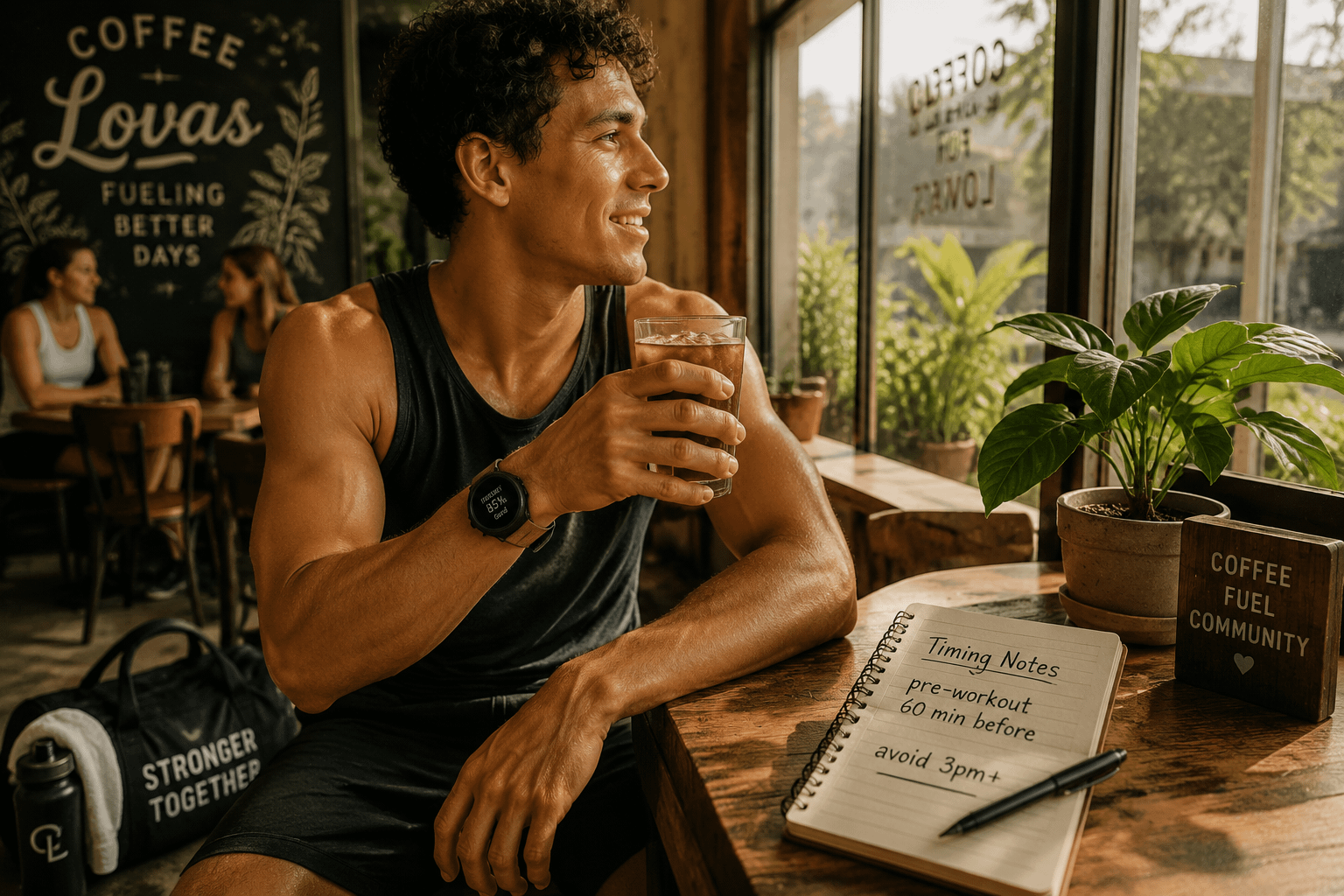
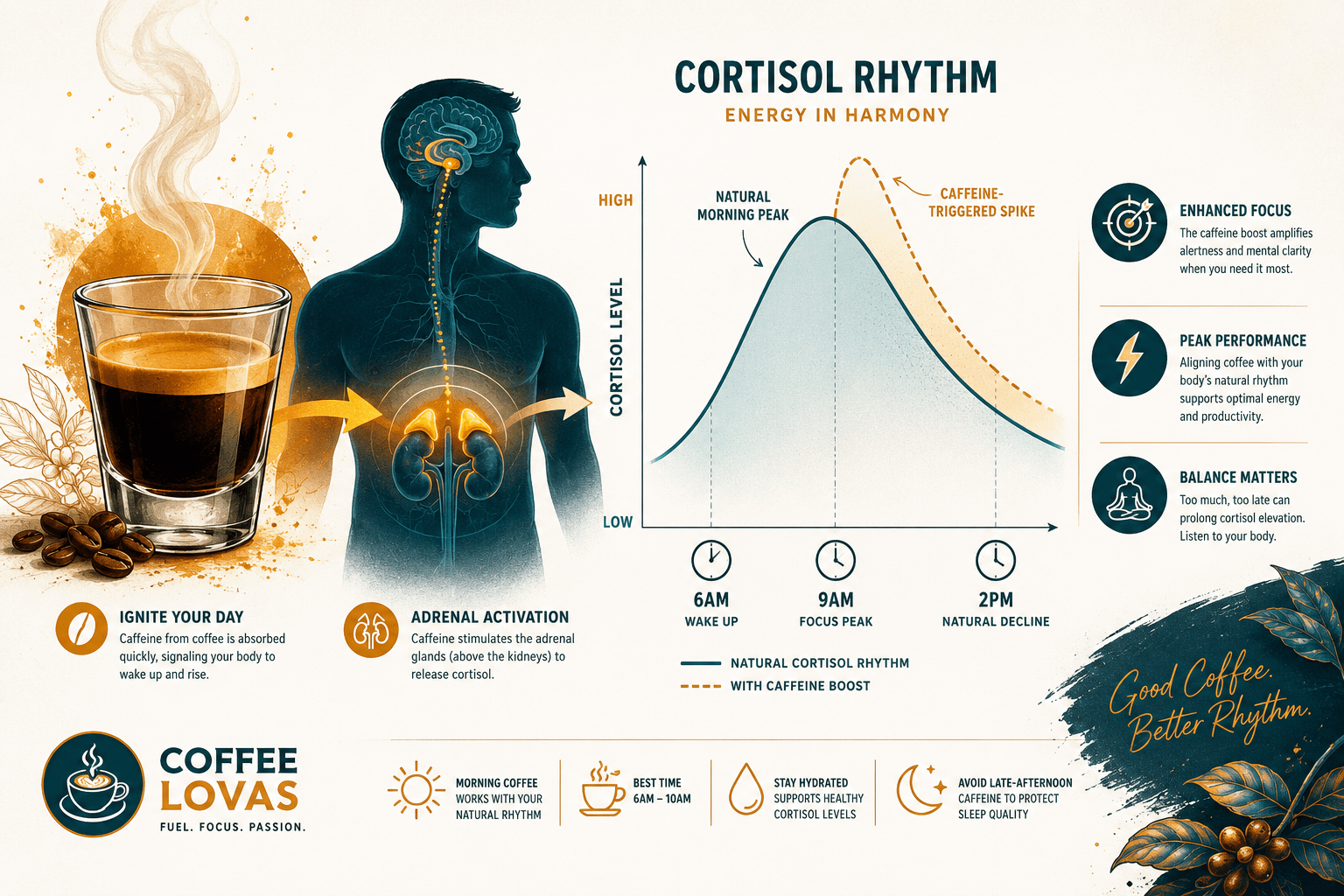
Caffeine — the hero compound in your beloved brew — is a powerful central nervous system stimulant. And one of its direct effects is stimulating cortisol production.
When you drink coffee, caffeine triggers your adrenal glands to release cortisol. Studies have shown that caffeine can increase cortisol levels by anywhere from 15% to 30% depending on the dose, the individual, and — crucially — the timing.
The Morning Coffee Timing Problem
Here’s something that might surprise you: drinking coffee right after you wake up might actually be less effective than waiting 30–60 minutes.

Why? Because your cortisol is already naturally surging during the CAR window (roughly 30–45 minutes post-waking). Stacking a caffeine-driven cortisol spike on top of your body’s natural peak doesn’t give you extra energy — it just creates unnecessary hormonal overlap. You’re essentially doubling down on a hand that’s already strong.
💡 Pro tip from your coffee community: Try delaying your first cup by 45–90 minutes after waking. Let your natural cortisol peak do its thing, then bring in the caffeine when levels start to dip. Many athletes report feeling more sustained energy and less of that mid-morning crash.
Pre-Workout Coffee: The Performance Sweet Spot
Now here’s where the news gets good — really good — for coffee lovas who train hard.
Caffeine is one of the most well-researched ergogenic (performance-enhancing) aids in sports science. A pre-workout coffee, consumed roughly 45–60 minutes before training, can:
| Benefit | What the Research Shows |
|---|---|
| Endurance performance | Improved time-to-exhaustion and reduced perceived effort |
| Strength output | Small but meaningful increases in power output |
| Focus and reaction time | Enhanced mental sharpness during competition |
| Fat oxidation | Increased use of fat as fuel during moderate-intensity exercise |
| Pain perception | Reduced perceived muscle pain during effort |
The cortisol spike from pre-workout caffeine actually supports performance in this context — it’s mobilizing energy and heightening alertness at exactly the moment you need it. This is coffee working with your physiology, not against it.
The sweet spot dose? Most research points to 3–6 mg of caffeine per kilogram of body weight. For a 70 kg (154 lb) athlete, that’s roughly 210–420 mg — about 1–3 cups of coffee depending on your brew method and strength.
When Coffee and Cortisol Become a Problem for Athletes
Understanding the upside of coffee and cortisol is great. But coffee lovas who train seriously also need to know when this relationship can work against them.
Overtraining + Overcaffeinating = Cortisol Overload
Athletes in heavy training blocks already have elevated baseline cortisol from the physical stress of training. Add multiple cups of strong coffee throughout the day, and you’re piling cortisol stimulus on top of cortisol stimulus.
Signs you might be in cortisol overload territory:
- 😩 Feeling wired but exhausted (the dreaded “tired but can’t sleep” cycle)
- 📉 Performance plateaus despite consistent training
- 🤒 Getting sick more often than usual
- 😤 Mood swings and irritability (beyond normal training grumpiness)
- 💤 Poor sleep quality even when you’re exhausted
If any of those sound familiar, it’s worth looking at both your training load and your coffee habits together.
The Late-Day Coffee Trap
Here’s one of the most practical pieces of advice in the whole coffee and cortisol conversation: watch your afternoon and evening coffee.
Caffeine has a half-life of approximately 5–7 hours in most people. That 3pm cold brew? It’s still partially active in your system at 9pm. And since cortisol needs to be low for quality sleep and muscle recovery, late-day caffeine can:
- Keep cortisol elevated during your recovery window
- Reduce deep sleep (where most muscle repair happens)
- Blunt the natural overnight drop in cortisol that your body needs
☕ Good coffee good people good vibes — but maybe not after 2pm if you’re serious about your recovery game.
Individual Variation: You’re Not a Lab Rat
It’s worth saying clearly: everyone metabolizes caffeine differently. Genetics play a huge role. Some people are fast caffeine metabolizers who can drink espresso at 8pm and sleep like a baby. Others are slow metabolizers who feel a single afternoon cup for hours.
If you’re unsure which camp you’re in, pay attention to your own sleep quality and recovery patterns. That’s your most honest data.
Practical Coffee Timing Strategy for Athletes
Here’s a simple framework to brew better and sip smarter around your training:
⏰ Morning (first 30–60 min after waking): Skip the coffee. Let your natural cortisol peak do its job.
☕ 60–90 min after waking: Enjoy your first cup. Cortisol is starting to dip, and caffeine fills in beautifully.
🏋️ 45–60 min before training: Strategic pre-workout coffee. This is your performance window.
🚫 Post-workout (first 60–90 min): Consider holding off. Cortisol is already elevated from training — let it come down naturally before adding more caffeine stimulus.
🌙 After 2pm (for most athletes): Tread carefully. Prioritize sleep and recovery over that extra cup.
Conclusion: Fuel Your Day the Smart Way
Here’s the beautiful truth about coffee and cortisol: you don’t have to choose between loving coffee and performing your best. You just need to be a little strategic about it — and that’s exactly what the Coffee Lovas community is all about.
Timing your coffee around your body’s natural cortisol rhythm, respecting your afternoon cutoff, and paying attention to how your body actually responds — that’s what it means to sip smarter. Every cup tells a story, and for athletes, that story should end with better performance, better recovery, and better sleep.
Your actionable next steps:
- ✅ Try pushing your first morning coffee back 45–60 minutes for one week and notice the difference.
- ✅ Experiment with a pre-workout coffee 45–60 minutes before your next training session.
- ✅ Set a personal “coffee cutoff” time (start with 2pm) and track your sleep quality.
- ✅ If you’re in a heavy training block, consider reducing total daily caffeine and see how recovery responds.
Life’s better with coffee — and it’s even better when your coffee is working for you. One more cup, coffee lovas. Make it count. ☕
Tags: coffee and cortisol, caffeine and performance, pre-workout coffee, cortisol and exercise, coffee timing for athletes, caffeine and hormones, sports nutrition coffee, coffee and recovery, cortisol awakening response, athlete coffee guide, caffeine cortisol spike, coffee fitness tips
References
- Lovallo, W. R., Whitsett, T. L., al’Absi, M., Sung, B. H., Vincent, A. S., & Wilson, M. F. (2005). Caffeine stimulation of cortisol secretion across the waking hours in relation to caffeine intake levels. Psychosomatic Medicine, 67(5), 734–739.
- Glade, M. J. (2010). Caffeine—Not just a stimulant. Nutrition, 26(10), 932–938.
- Spriet, L. L. (2014). Exercise and sport performance with low doses of caffeine. Sports Medicine, 44(S2), 175–184.
- Hackney, A. C. (2006). Stress and the neuroendocrine system: The role of exercise as a stressor and modifier of stress. Expert Review of Endocrinology & Metabolism, 1(6), 783–792.
- Nehlig, A. (2010). Is caffeine a cognitive enhancer? Journal of Alzheimer’s Disease, 20(S1), 85–94.