
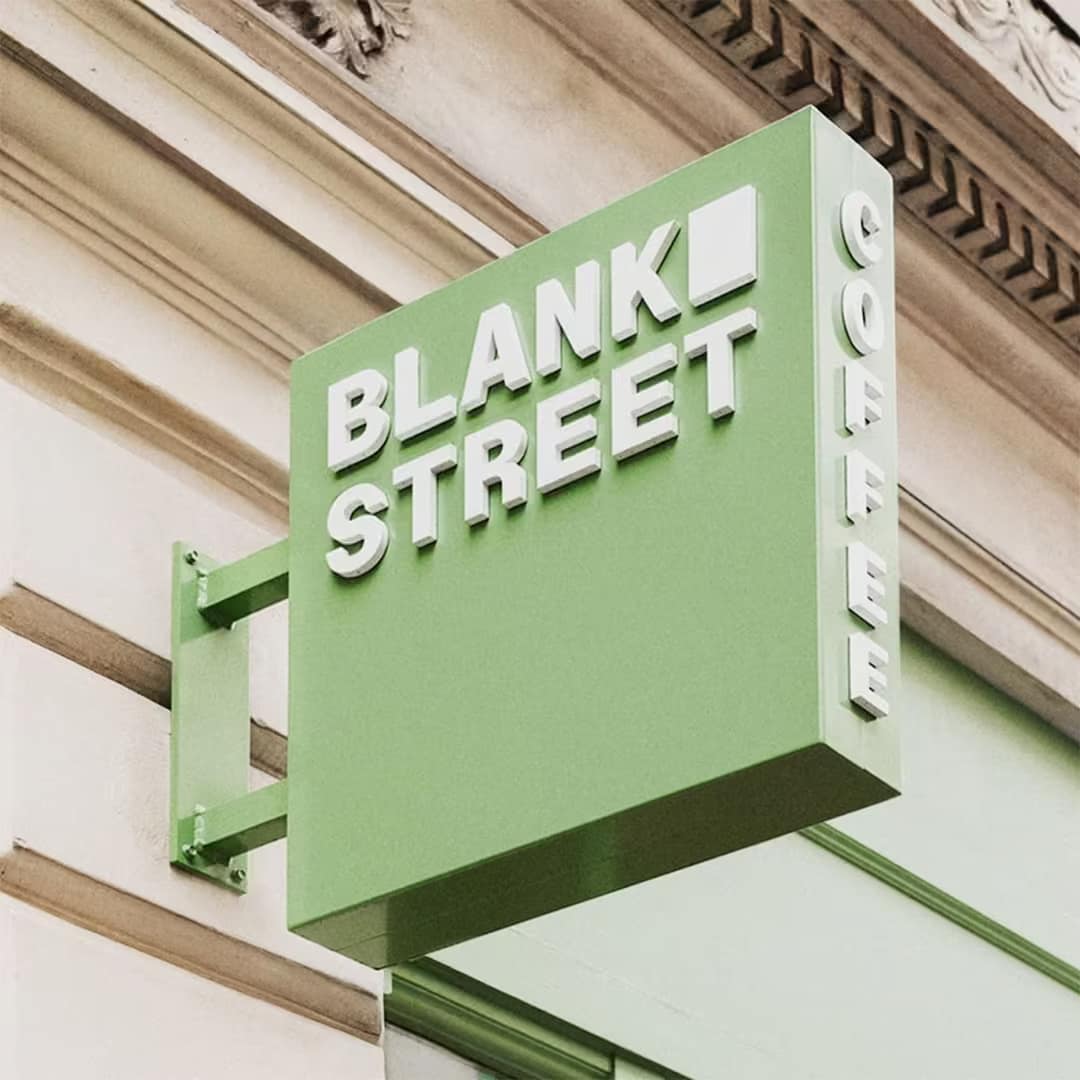
Our Blank Street Coffee review started the way most people discover this chain: scrolling past an aesthetically perfect iced matcha on Instagram and wondering if it’s actually as good as the internet says. After three weeks and a dozen-plus drinks across six New York locations, our answer is a confident “mostly yes” — with a few caveats worth knowing before you order.
What Is Blank Street Coffee?
Blank Street started as a single battery-powered coffee cart in Williamsburg, Brooklyn, back in 2020. Founders Issam Freiha and Vinay Menda built the concept around small-format, tech-forward stores that could pump out high-volume orders without the overhead of a full café. It worked. The chain has since expanded to more than 90 locations across New York, Boston, Washington D.C., and London, with new markets like Los Angeles and Philadelphia added in 2026. Backed by over $127 million in venture funding from firms like General Catalyst and Tiger Global, Blank Street has been reported to be in talks to raise another $100 million at a valuation approaching $1 billion — a sign that investors think this “Gen Z Starbucks” positioning still has room to run.
The brand’s calling card is matcha. According to reporting from the Wall Street Journal, ceremonial-grade matcha drinks account for roughly half of Blank Street’s total sales, and it shows — the matcha menu is deeper and more creative than almost any other national chain we’ve tested, with rotating seasonal flavors like Coconut Cream Matcha and Miami Vice Matcha showing up throughout the year.
The Menu: Matcha, Lattes, and Cold Brew
Walk up to a Blank Street counter (or open the app) and you’ll find a menu built around a handful of core bases — espresso, matcha, and cold brew — dressed up with rotating syrups and mix-ins. Standouts from our testing included the Iced Matcha Latte, the Shaken Vanilla Bean Cold Brew Latte, and a limited-run Strawberry Shortcake Matcha that genuinely tasted like dessert without being cloying.

In-store menu pricing is where Blank Street makes its “affordable specialty coffee” case: a standard matcha or latte runs about $3 to $5, which stacks up well against a comparable $5–$7 drink at Starbucks. Order through a delivery app, though, and that value proposition erodes fast — we saw the same Iced Matcha Latte priced at $7.06 on Uber Eats, and specialty matchas like the Iced Strawberry Shortcake Matcha climbing past $8. If you’re chasing the budget-friendly reputation this chain built its name on, ordering in person or through the Blank Street app directly is the move.
Milk options cover oat, almond, coconut, whole, and skim, with oat milk as the default pairing for most matcha drinks — no surprise given the brand’s younger, plant-based-leaning customer base. Food options are minimal: a few grab-and-go pastries like banana bread and croissants, but don’t expect a full bakery case.
What We Tasted
The matcha is the real headline. Every location we visited used what tasted like genuinely good ceremonial-grade matcha — vegetal, a little sweet, without the chalky bitterness you get from lower-grade powder at other chains. The Iced Matcha Latte, unsweetened default, was our favorite base order across all six visits.
Espresso drinks were solid but less distinctive — good, consistent, “you’ll enjoy this every day” coffee rather than anything a specialty roaster would get excited about. That’s by design; Blank Street’s own leadership has said publicly they’re not trying to make the best cup of coffee you’ve ever had, just a really good one you’ll drink twice a day. In our side-by-side against Starbucks, the Blank Street oat milk latte edged out Starbucks on smoothness and had noticeably less bitterness, while the iced matcha comparison was a clear win for Blank Street — Starbucks’ matcha tasted thinner and sweeter by comparison.
Where the experience wobbled was consistency. Two of our six visits had noticeably longer wait times despite the “high-throughput” design promise, and one location’s cold brew tasted watered down from what we assume was an over-diluted ice ratio. This tracks with what we found in customer review research — sentiment is generally strong, but it does vary location to location, especially at the smaller kiosk-style stores versus the newer, larger-format shops Blank Street has started rolling out in 2026.

The Vibe (and the Seating Problem)
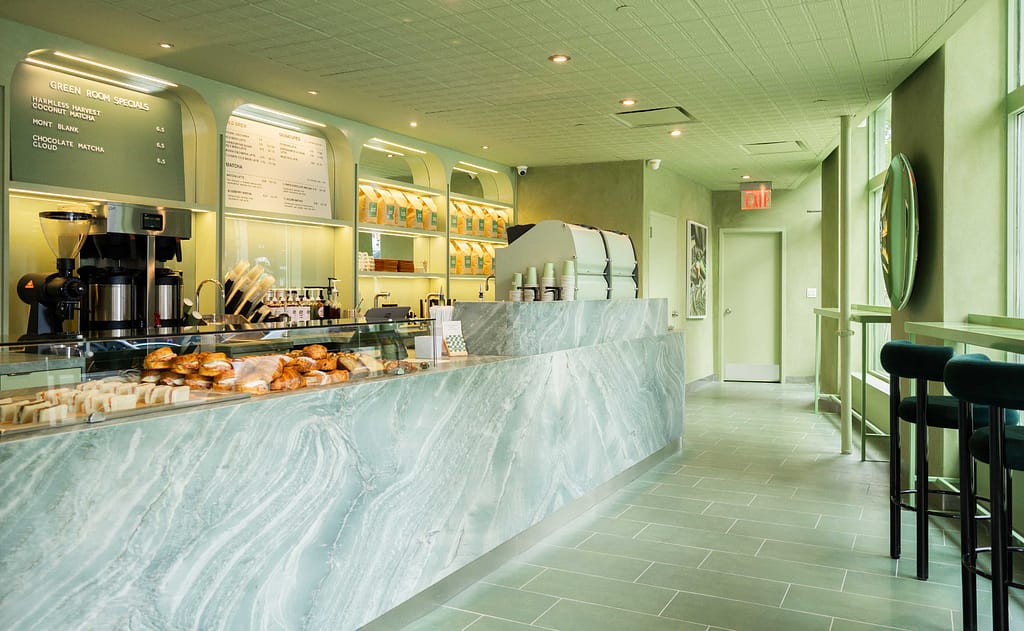
Here’s the biggest adjustment if you’re used to a traditional café: most Blank Street locations are not built for lingering. Many of the original micro-format stores are so small they don’t have seating at all — you order, you get your drink, you leave. The branding is sharp (that bright green is unmistakable), the staff we encountered were consistently upbeat and fast, but if you’re looking for a spot to post up with a laptop for two hours, this isn’t it at most addresses.
That’s starting to change. Blank Street has begun opening larger, “TikTok-friendly hangout” format stores — one recent Manhattan location we’re aware of is roughly three times the size of a typical shop, with actual seating and social-media-ready design touches. If that format expands, it could meaningfully change the café’s “best for” use case. For now, though, plan on Blank Street being a grab-and-go stop, not a coffee shop to camp out in.
Is Blank Street Coffee Good?
Judged purely on the drink in your hand, yes — particularly if matcha is your thing. Judged as a full café experience, it depends on what you’re looking for. As a fast, affordable, consistently tasty coffee and matcha stop for people on the move, Blank Street delivers on its promise. As a place to sit, work, or hang out, most locations simply aren’t built for it. If you want the full menu and current locations, the Blank Street app is the most reliable way to check pricing and avoid the delivery-app markup we ran into during testing.
One more thing worth flagging: reporting has noted that some flavored matcha and latte drinks can carry meaningfully high sugar content — worth keeping in mind if you’re a daily drinker and watching added sugar intake. Ordering unsweetened or asking for reduced syrup is an easy fix if that matters to you.
FAQ
- Is Blank Street Coffee good? Yes, especially the ceremonial matcha drinks, which most testers and reviewers rate as genuinely strong. Espresso drinks are solid but less distinctive than the matcha lineup.
- Is Blank Street Coffee expensive? In-store pricing (roughly $3–$5 for standard drinks) is generally cheaper than Starbucks, but delivery-app pricing runs noticeably higher, often $7–$8 per drink.
- Does Blank Street Coffee have seating? Many of the original micro-format locations have little to no seating, since the concept was built for fast, grab-and-go service. Newer, larger-format stores are starting to add more seating and lounge space.
- What is Blank Street’s most popular drink? The Iced Matcha Latte is the brand’s signature order, with ceremonial-grade matcha reportedly accounting for around half of total sales.
- How does Blank Street compare to Starbucks? Blank Street tends to be cheaper in-store, faster in line, and stronger on matcha, while Starbucks offers more seating, a bigger food menu, and wider availability.
- Does Blank Street Coffee use real matcha? Yes, locations use ceremonial-grade matcha rather than lower-grade culinary matcha, which contributes to the smoother, less bitter flavor testers noted.
- Is Blank Street Coffee available where I live? Blank Street currently operates in New York, Boston, Washington D.C., London, and is expanding into new markets like Los Angeles and Philadelphia; check the official locations page since availability changes often.
- Does Blank Street have a rewards program? Yes, Blank Street’s loyalty program lets customers earn points on every order with no minimum spend, redeemable for discounts through the app. Confirm current terms on the official app or site before relying on this, since loyalty programs can change.