


Over 2.25 billion cups of coffee are consumed every single day worldwide — and behind every one of those cups is a story shaped by a handful of extraordinary people, places, and ideas. ☕ If you’ve ever wondered who built the coffee world you love sipping your way through, you’re in the right place. These are the Coffee World Icons Every Coffee Lova Should Know — the legends, innovators, and game-changers who turned a humble bean into a global obsession.
Whether you’re a daily drip drinker, a home espresso enthusiast, or someone who just discovered the magic of a perfectly pulled shot, this is your backstage pass to the personalities and milestones that shaped coffee culture as we know it. Good coffee, good people, good vibes — let’s get into it.
Key Takeaways
- ☕ A small group of visionary people fundamentally shaped modern coffee culture — and knowing their stories makes every cup more meaningful.
- 🌍 Coffee’s journey from Ethiopian highlands to your favorite mug involved pioneering figures across multiple continents and centuries.
- 🏆 The specialty coffee movement changed how we grow, roast, brew, and talk about coffee forever.
- 🔧 Iconic inventions — from the espresso machine to the AeroPress — were born from real people solving real coffee problems.
- 🤝 The coffee community is built on shared passion, and understanding its icons helps every coffee lova feel more connected to the cup.
The Legends Behind the Cup: Coffee World Icons Every Coffee Lova Should Know
Every great movement has its heroes. Coffee is no different. These are the people who didn’t just drink coffee — they redefined it.
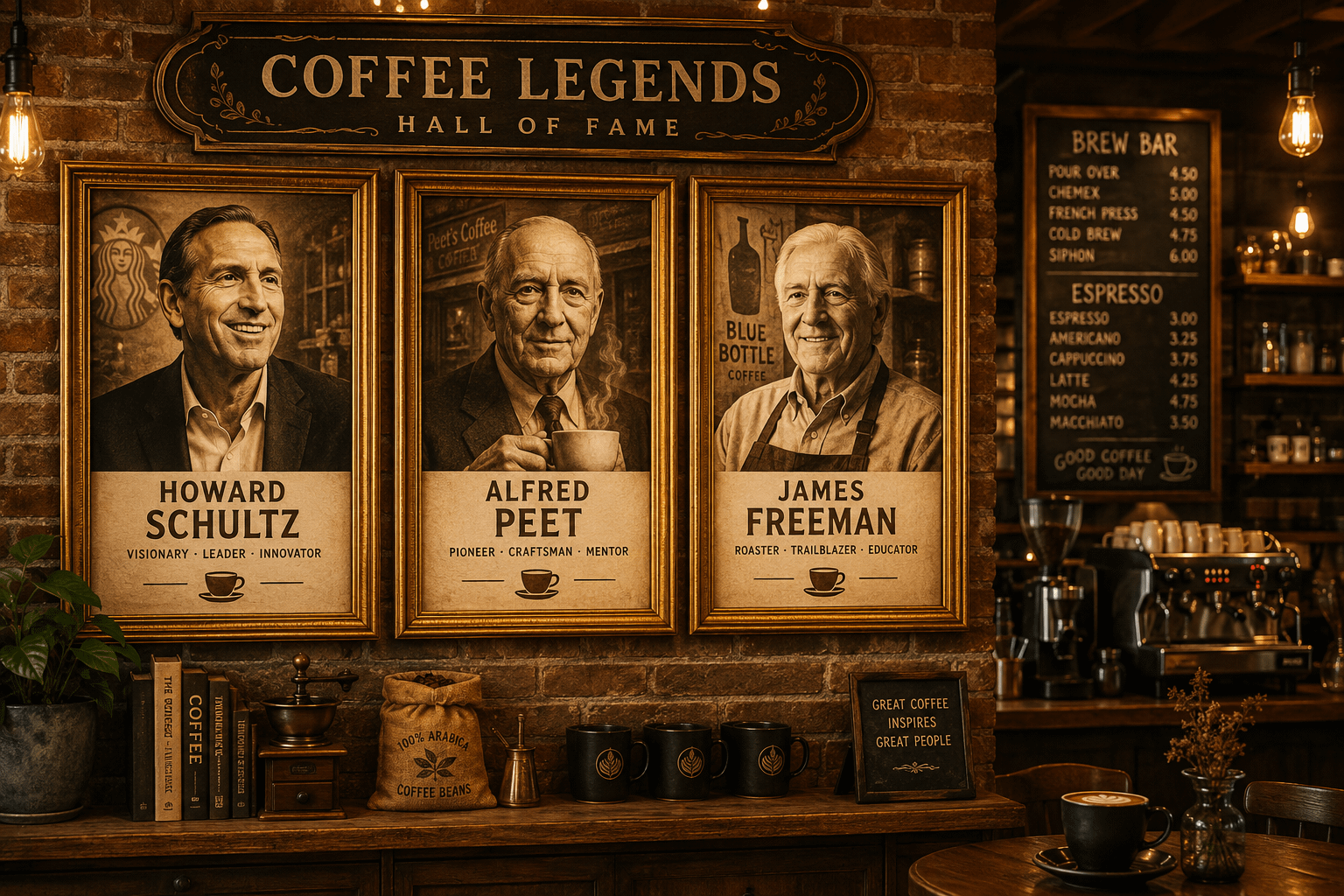
Alfred Peet — The Godfather of American Specialty Coffee
Before Starbucks, before third-wave coffee shops on every corner, there was Alfred Peet. Born in the Netherlands in 1920, Peet grew up surrounded by coffee — his father ran a coffee roasting business. When he moved to the United States in the 1950s, he was genuinely shocked by the weak, low-quality coffee Americans were drinking.

So in 1966, he opened Peet’s Coffee in Berkeley, California, and changed everything. Peet introduced Americans to dark-roasted, high-quality, freshly roasted coffee sourced directly from origin. He was the first to bring a European-style approach to coffee quality to the U.S. market.

Here’s the full-circle moment: the founders of Starbucks were Peet’s customers and employees. They literally learned from him before starting their own company. Alfred Peet is, without question, one of the most important coffee world icons in history — and honestly, he doesn’t get nearly enough credit.
“Peet didn’t just open a coffee shop. He opened a conversation about quality that the entire industry is still having today.”
Howard Schultz — The Man Who Made Coffee a Lifestyle
Say what you want about Starbucks, but Howard Schultz understood something most people missed: coffee isn’t just a drink. It’s an experience. After a trip to Milan in 1983, Schultz fell in love with Italian espresso culture — the warmth, the ritual, the community of the neighborhood café.
He brought that vision back to America and transformed Starbucks from a small Seattle coffee bean retailer into a global lifestyle brand with over 35,000 locations worldwide. He introduced concepts like the “third place” — somewhere between home and work where people could gather, connect, and, of course, caffeinate.
Love it or leave it, Schultz proved that coffee culture could scale. And every coffee shop that’s ever made you feel at home owes a little something to that idea.

James Freeman — The Pioneer of Third-Wave Coffee
If Alfred Peet was the first wave and Howard Schultz was the second, James Freeman helped launch the third. Freeman founded Blue Bottle Coffee in Oakland in 2002, operating out of a farmer’s market stand with a single goal: serve the freshest, most carefully sourced coffee possible.
Blue Bottle became famous for its “48-hour freshness” rule — they wouldn’t sell coffee more than 48 hours after roasting. That sounds extreme until you taste the difference. Freeman’s obsession with freshness and transparency helped spark the modern specialty coffee movement that now influences cafés everywhere.
Aida Batlle — The Queen of Coffee Farming
Not all icons wear barista aprons. Aida Batlle is a Salvadoran coffee farmer who became one of the most celebrated names in specialty coffee. She took over her family’s farm and began producing coffees so exceptional that they started winning international competitions and fetching record prices.
Batlle proved that the farmer is just as important as the roaster or the barista — maybe more so. She put El Salvador on the specialty coffee map and inspired a generation of producers to treat their farms like the artisan operations they truly are. Every coffee lova who appreciates a well-sourced single origin has people like Aida Batlle to thank.
Iconic Inventions and Institutions: More Coffee World Icons Every Coffee Lova Should Know
The coffee world isn’t just built on people — it’s built on brilliant inventions and organizations that changed how we brew, compete, and connect.
The Espresso Machine — Angelo Moriondo’s Gift to the World
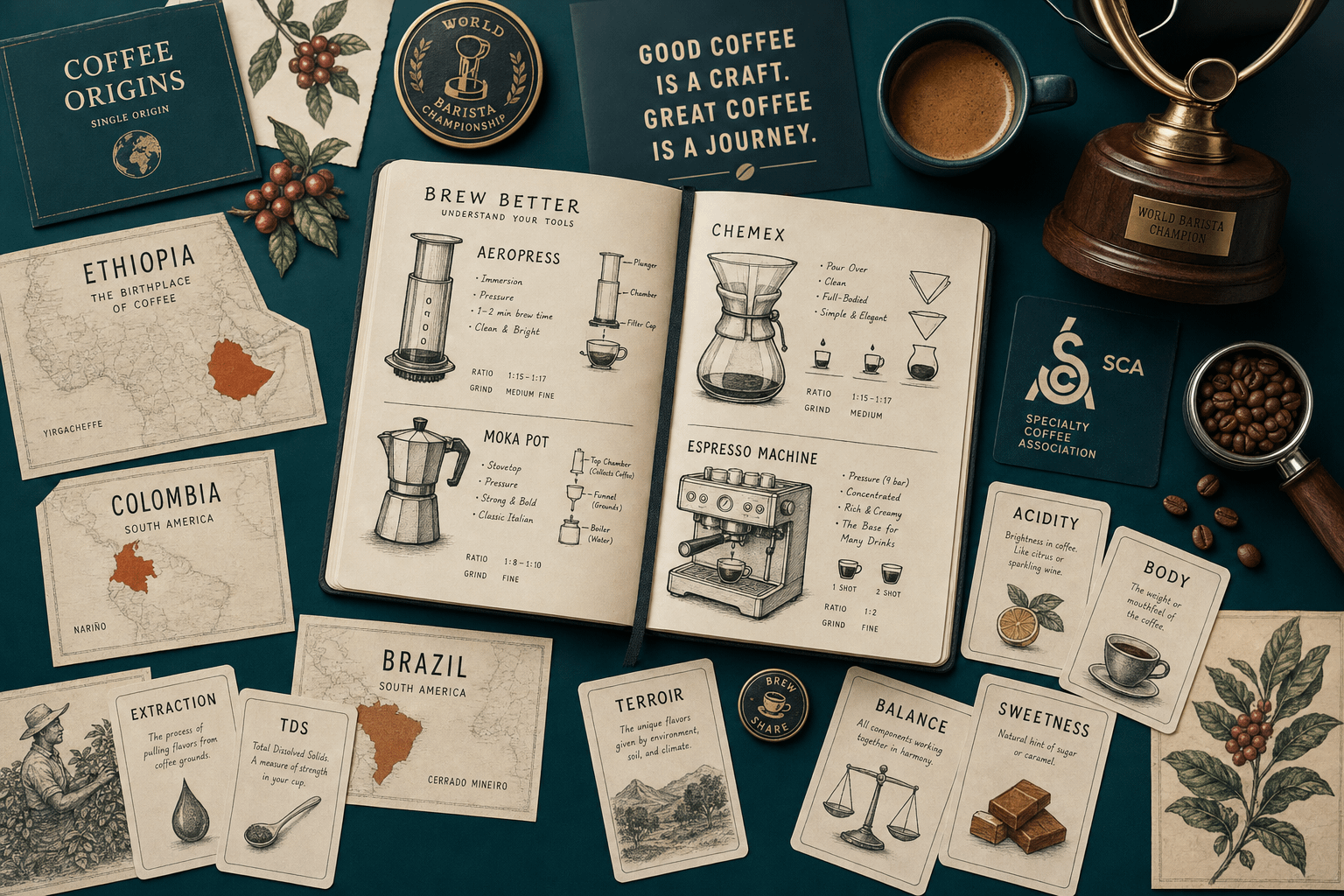
In 1884, Angelo Moriondo of Turin, Italy, patented the first espresso machine. His invention used steam pressure to force hot water through coffee grounds at speed — producing a concentrated, rich shot of coffee in seconds rather than minutes.
Later refinements by Luigi Bezzera and Desiderio Pavoni brought the espresso machine to cafés across Italy, and eventually the world. Without this invention, there’s no cappuccino, no latte, no flat white, no cortado. Basically, no modern coffee shop culture as we know it. 🙌
The AeroPress — Alan Adler’s Accidental Masterpiece
Here’s a fun one. Alan Adler was an engineer and inventor — most famous for creating the Aerobie flying ring — who just happened to love coffee. In 2005, he invented the AeroPress while experimenting with ways to brew a single cup quickly without bitterness.
The result? One of the most beloved, versatile, and affordable brewing devices ever made. The AeroPress has its own World Championship (yes, really — the World AeroPress Championship has been running since 2008), and it’s a staple in the bags of coffee travelers everywhere. Proof that sometimes the best coffee innovations come from people who just wanted a better cup.
The Specialty Coffee Association (SCA)
No list of coffee world icons every coffee lova should know would be complete without mentioning the Specialty Coffee Association. Founded in 2017 through the merger of the SCAA (Specialty Coffee Association of America) and SCAE (Specialty Coffee Association of Europe), the SCA sets the global standards for coffee quality, education, and competition.
They run the World Barista Championship, the World Brewers Cup, and dozens of other competitions that push the boundaries of what coffee can be. They also provide certifications and training that help baristas and roasters worldwide level up their craft.
Think of the SCA as the governing body of the coffee world — the people making sure “specialty coffee” actually means something.
A Quick Reference: Coffee Icons at a Glance
| Icon | Contribution | Why It Matters |
|---|---|---|
| Alfred Peet | Founded specialty coffee in the U.S. | Set the quality standard before Starbucks existed |
| Howard Schultz | Built Starbucks into a global brand | Made coffee culture mainstream worldwide |
| James Freeman | Founded Blue Bottle Coffee | Launched the third-wave freshness movement |
| Aida Batlle | Award-winning coffee farmer | Elevated the role of the producer |
| Angelo Moriondo | Invented the espresso machine | Made modern café culture possible |
| Alan Adler | Invented the AeroPress | Democratized great single-cup brewing |
| The SCA | Global coffee standards body | Defines and champions specialty coffee quality |
Conclusion: Every Cup Tells a Story
Here’s the thing about knowing your coffee world icons — it doesn’t make you a coffee snob. It makes you a better coffee appreciator. When you understand that your morning espresso exists because of an Italian inventor in 1884, or that the specialty roaster down the street was inspired by a farmer in El Salvador, every sip carries a little more meaning.
Coffee is always a good idea, but coffee with context is something even better. ☕
Your next steps as a coffee lova:
- ✅ Try a coffee from a farm you’ve never heard of — look for the producer’s name on the bag
- ✅ Brew something new this week (AeroPress, anyone?)
- ✅ Visit a specialty café and ask the barista about their beans — they love that question
- ✅ Share this article with a fellow coffee lova who needs to know these names
- ✅ Keep exploring, keep sipping, keep celebrating the people who made your cup possible
Life’s better with coffee — and it’s even better when you know the incredible humans behind it. Sip, smile, repeat. 🙌
References
- Pendergrast, M. (2010). Uncommon Grounds: The History of Coffee and How It Transformed Our World. Basic Books.
- Schultz, H., & Yang, D. J. (1997). Pour Your Heart Into It: How Starbucks Built a Company One Cup at a Time. Hyperion.
- Specialty Coffee Association. (2023). About the SCA. https://sca.coffee/about
- World AeroPress Championship. (2023). History of the WAC. https://worldaeropresschampionship.com
- Moldvaer, A. (2014). Coffee Obsession. DK Publishing.
- Hoffmann, J. (2014). The World Atlas of Coffee. Mitchell Beazley.
Tags: coffee world icons, specialty coffee history, coffee culture, Alfred Peet, Howard Schultz, AeroPress history, Specialty Coffee Association, coffee legends, third wave coffee, coffee brewing icons, coffee pioneers, coffee lova